Settlement
How and When the Seller Gets Paid
Each seller receives funds in the bank account they declared during registration. Getnet settles directly to the declared bank account, with no intermediary management by the platform.
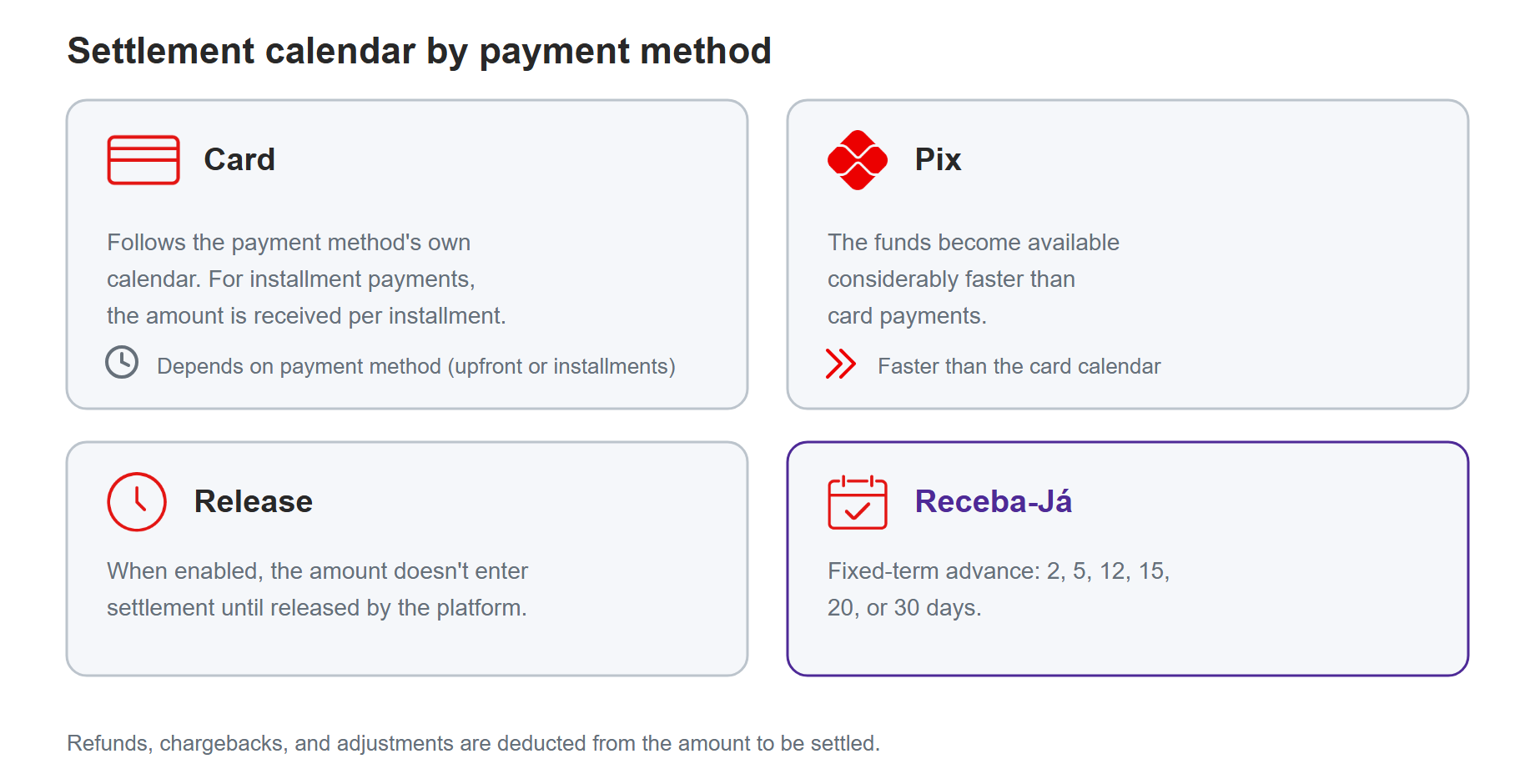
The settlement calendar depends on the payment method and on the platform's own operation:
- Card amounts follow the payment method's own calendar and, for installment payments, are received installment by installment.
- Pix amounts become available considerably faster than card amounts.
- If the platform uses release, the amount doesn't enter settlement until it's released.
- Refunds, chargebacks, and adjustments are deducted from the amount to be settled.
The flow of a payment, from the purchase to the credit to the seller's account, follows the sequence below. The example illustrates two sellers with different settlement calendars for the same purchase, and the timeframes (D+10, D+30) are illustrative only, since each seller's actual timeframe depends on the payment method and the release configuration, as described above.
Info: Currently, settlements are only made to bank accounts approved by Núclea in Brazil. See how to register a partner's bank account in the Onboarding API — PF and Onboarding API — PJ guides.

The platform should reconcile the bank credit at the settlement level. The transactional detail of each item is available in the statement.
Receba-Já
- It applies to amounts with a future receipt date, meaning the seller's future balance.
- It works as an early payment plan for the seller: instead of following the normal flow of installments, the amount is paid on a fixed term, with plans available for 2, 5, 12, 15, 20, and 30 days.
- In the statement, a sale under Receba-Já generates a single schedule record instead of one per installment, and the anticipation is shown as an identifiable adjustment.
- Once anticipated, the amount is no longer part of the original schedule and appears as anticipated in the statement.
- The platform should account for the impact on reconciliation, since the credited date and amount differ from the original forecast.
Important: The scope, eligibility criteria, and economic terms of Receba-Já are agreed upon within the commercial process with Getnet.
Next Steps
- Rejected Payments: search for payments that were rejected.
- Show UR: look up each transaction's unique receivable identifier (UR).
On this page